

The Science of Precision: A Comprehensive Guide to Modern Sous Vide Technology
The culinary world has undergone a radical transformation over the past several decades, moving away from the guesswork of traditional high-heat methods toward a more scientific, data-driven approach. At the heart of this revolution is sous vide, a French term meaning “under vacuum.” This cooking technique involves sealing food in a vacuum-tight bag and submerging it in a temperature-controlled water bath for a precise duration. While once the exclusive domain of Michelin-starred chefs in elite European kitchens, the adoption of this method has expanded rapidly across both domestic and commercial landscapes. The primary driver of this expansion is the development of sophisticated hardware designed to maintain thermal stability with microscopic accuracy. Understanding the nuances of sous vide equipment is essential for any culinary professional or food manufacturer looking to achieve consistent, high-quality results at scale.
The Physical and Chemical Principles of Vacuum Cooking
To appreciate the hardware, one must first understand the biological and chemical objectives of the process. Traditional cooking methods, such as roasting or pan-searing, rely on high external temperatures to conduct heat toward the center of the food. This often results in a “temperature gradient,” where the exterior is overcooked by the time the interior reaches the desired doneness. Sous vide eliminates this gradient by setting the water bath to the exact target internal temperature of the food.
Because the food is vacuum-sealed, there is no evaporation of moisture or volatile aromatics. This means that the flavors and nutrients that are typically lost to the air or the cooking liquid remain trapped within the ingredient. From a structural standpoint, the low-temperature, long-time (LTLT) approach allows for the slow breakdown of tough connective tissues (collagen) into gelatin without denaturing the muscle fibers to the point of toughness. This creates a texture and succulence that is physically impossible to replicate through any other medium.
The Core Components of Temperature Control
The most critical element of any sous vide setup is the thermal regulator. In a home environment, this often takes the form of an immersion circulator—a “stick” that contains a heating element, a water pump, and a high-precision thermostat. However, as the scale of production increases, the hardware requirements become significantly more complex. In professional and industrial settings, the equipment must be capable of handling massive volumes of water while maintaining a temperature variance of less than 0.1 degree Celsius.
In large-scale food production, the transition from manual baths to automated systems is necessary to ensure food safety and operational efficiency. When managing the production of thousands of meals or specialized food products, manufacturers rely on sous vide equipment that integrates advanced agitation systems and digital monitoring. These industrial systems are designed to eliminate “cold spots” in the water bath, ensuring that every individual package reaches the required pasteurization temperature simultaneously. This level of control is vital not only for culinary quality but also for complying with rigorous HACCP (Hazard Analysis and Critical Control Point) regulations.
Vacuum Sealing and the Importance of Packaging Integrity
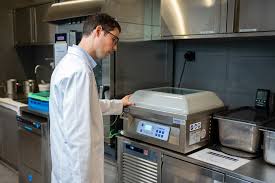
The second pillar of the sous vide process is the vacuum seal. The primary function of the vacuum is to ensure efficient heat transfer; air is an insulator, and even a small pocket of air between the food and the bag can lead to uneven cooking. Industrial vacuum sealers utilize chamber technology, where the pressure inside the entire chamber is reduced before the bag is sealed. This allows for the packaging of liquids—such as marinades, oils, or sauces—without the liquid being sucked out of the bag, a common limitation of domestic edge-sealers.
Packaging materials must also be carefully selected. They must be heat-stable and free from harmful chemicals like BPA or phthalates, as they will be subjected to heat for extended periods. In high-volume environments, the durability of the seal is paramount. A single bag failure in a large industrial tank can lead to cross-contamination and significant financial loss. Therefore, professional equipment often features multi-ribbon sealing bars to provide redundant protection against leaks.
Industrial Scaling and Throughput Optimization
For food manufacturers, the challenge of sous vide is balancing precision with throughput. Unlike a restaurant that might cook twenty steaks at a time, an industrial facility may need to process several tons of protein or vegetables daily. This requires specialized “cook-chill” systems where the food is cooked to perfection and then immediately moved to an ice-filled “tumble chiller.” This rapid reduction in temperature is essential for preventing the growth of anaerobic bacteria and extending the shelf life of the product for retail or wholesale distribution.
The integration of automation into these systems allows for “hands-off” cooking cycles. Digital controllers can store complex cooking profiles, automatically adjusting temperatures and times based on the specific product being loaded. This reduces human error and ensures that the flavor profile of a product remains identical across different batches produced months apart. In an era where brand consistency is a primary driver of consumer trust, the reliability of industrial-grade hardware is an indispensable asset for any food service brand.
Enhancing Nutritional Value and Yield
Beyond the sensory benefits, the move toward precision cooking hardware is driven by economic and nutritional factors. Traditional cooking can result in a weight loss of 20% to 30% due to moisture evaporation. Sous vide reduces this loss to less than 5%, meaning that more of the raw material ends up on the consumer’s plate. For high-volume producers, this increase in yield can translate to millions of dollars in saved ingredient costs annually.
From a nutritional perspective, the lower temperatures used in vacuum cooking preserve heat-sensitive vitamins and minerals that are often destroyed by boiling or high-heat roasting. Furthermore, the lack of oxygen in the bag prevents the oxidation of fats, maintaining the nutritional integrity and fresh flavor of the ingredients. As consumers become more health-conscious, the ability to market “nutrient-dense” and “minimally processed” foods becomes a significant competitive advantage, all made possible by the controlled environment of the water bath.
The Future of Sous Vide and Smart Kitchen Integration
As we look toward the future of culinary technology, the integration of Internet of Things (IoT) capabilities into cooking hardware is the next frontier. We are already seeing commercial systems that can be monitored and adjusted remotely via smartphone or central management software. This allows for real-time tracking of cook cycles and automatic logging of data for safety audits. If a temperature fluctuation occurs, the system can send an immediate alert, preventing the loss of a batch.
In the domestic sphere, “smart” immersion circulators now come with apps that guide users through the specific temperatures and times for thousands of different ingredients, effectively democratizing professional-grade results. Whether it is a home cook perfecting a Sunday roast or a global manufacturer producing millions of ready-to-eat meals, the trajectory is clear: the future of food is precise, controlled, and deeply rooted in the capabilities of modern thermal engineering.
Conclusion: Investing in Consistency
In conclusion, the adoption of vacuum-based cooking technology represents a maturation of the food industry. We are moving away from an era of “artistic intuition” and toward one of technical mastery. While the skill of the chef remains vital for seasoning and creativity, the mechanical execution of the cook is now handled by machines that do not suffer from fatigue or distraction.
Investing in high-quality hardware is not merely a purchase; it is a commitment to a standard of excellence. By removing the variables of heat and time, we allow the true flavors of the ingredients to shine. Whether you are seeking to reduce waste, increase safety, or simply provide a superior dining experience, the specialized tools of the sous vide world provide the foundation for success. As technology continues to advance, our ability to feed the world with nutritious, delicious, and perfectly cooked food will only continue to grow, guided by the steady and precise hand of modern culinary engineering.