

Movie Prop Masters: How to Avoid On-Set Malfunctions with Precision Machining and Cut Downtime by 40%
Introduction
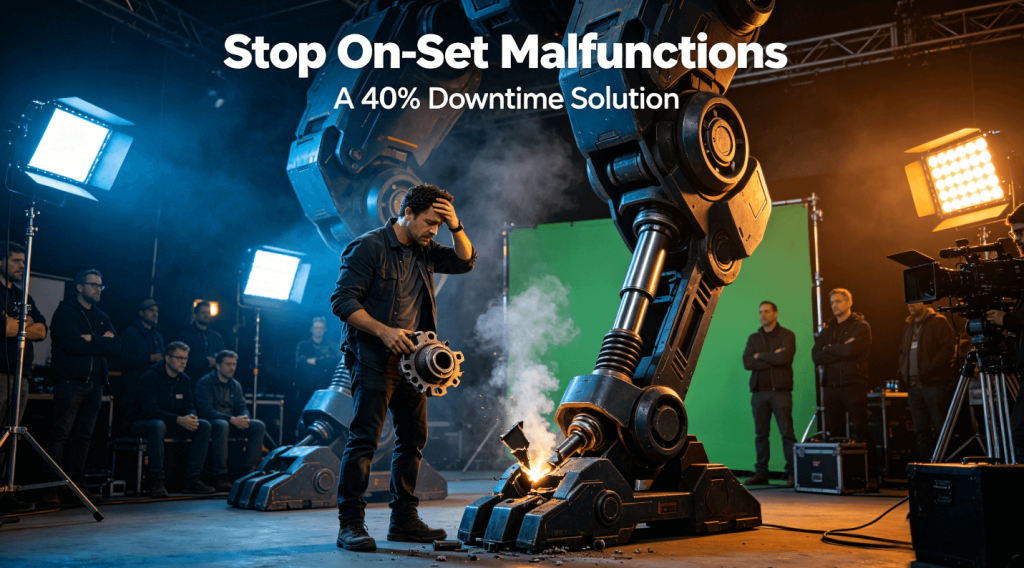
The creation of a motion picture is always a battle with time and budget constraints. Failure to operate correctly because of malfunctioning of a custom-made prop, a failure caused by a tiny part of the camera rig, or malfunction of an effect mechanism during its final testing phase could lead to significant losses for a film. All of the aforementioned examples of malfunctions stem from one of the key stages of prop making – the point where creative concepts are translated into tangible physical parts.
Unfortunately, too often, the props in question are made out of modified components, handcrafted by craftsmen, or purchased from manufacturers who don’t fully appreciate the challenges of film production. Such practices lay hidden landmines of performance problems ahead of the filmmakers. The purpose of this article is to demonstrate the role played by the new technologies of professional precision machining–CNC machining services–in providing the required reliability in film production technologies. The paper gives a methodology of choosing the best CNC machining supplier as one chooses a leading role.
Why Off-the-Shelf Components May Be the Greatest Weakness in Custom Film Rigging Equipment
The innate disparity between mass-produced industry parts and the requirements of film equipment introduces inherent vulnerability. Although the industrial components are engineered for repetitive and uninterrupted usage within a stable environment, the film rigging equipment needs to be adaptable to dynamic loads, harsh environments, and functional integration. Using generic components that “just fit” will inevitably lead to poor results and endanger workers on set.
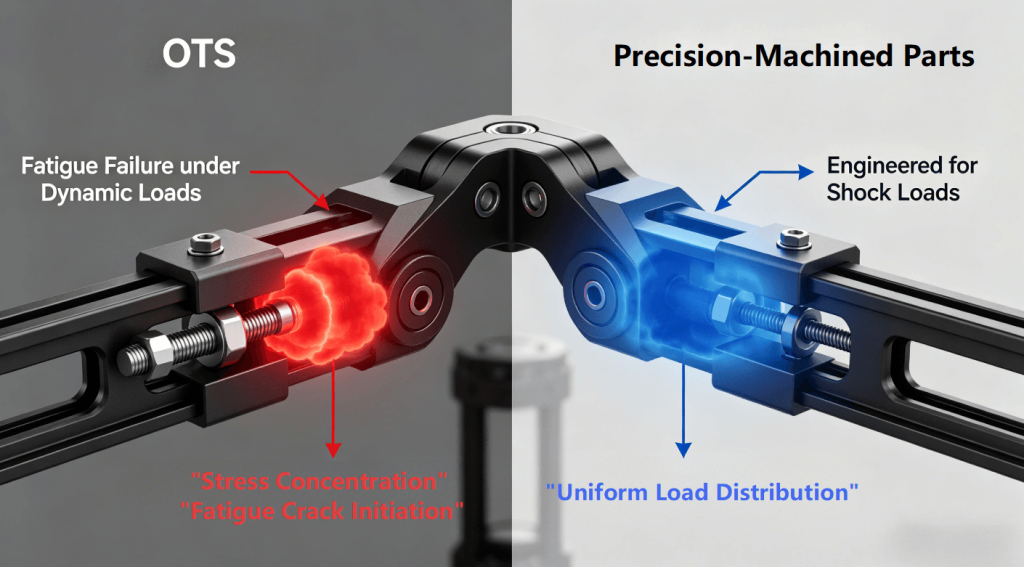
- Disparity in Loading Conditions: Ordinary industrial fasteners, clamps, and gears are typically designed to handle continuous load conditions. On the other hand, film rigging gear experiences shock loads (e. g. camera jib stopping abruptly), irregular loads, and frequent heavy use. It may appear that standard components would suffice if their static load capacity is comparable; nevertheless, these components are not capable of withstanding fatigue failures caused by changing loads. Fatigue failure will happen sooner or later at a vulnerable point, thereby turning the off-the-shelf part into the weakest link of the assembly system.
- Environmental Factors Other Than Specifications: Movie sets are far from being sterile environments like industrial ones. Film equipment can be exposed to various environmental conditions such as rain dust sand, salt water sprays, and sudden changes in temperature. A metal part manufactured to a standard will rust over time, while a gear made of plastic might become brittle because of cold or change its shape due to heat. Custom manufacturing not only entails the use of environmental-resistant materials but it also requires the application of special coating techniques from the very start instead of depending on a generic part to endure such conditions.
- Importance of Mechanical Soundness for Crew Safety: A movie prop that is seemingly non-functioning still needs to be mechanically reliable. An inadequately constructed hilt of the prop sword or a railing on any prop can be a serious source of danger for the performers involved. In the United States, the Occupational Safety and Health Administration (OSHA) gives detailed instructions that emphasize that all the mechanical equipment, despite its purposes, must be constructed and maintained in such a way as to minimize risk of injury to the workers. Thus, it is essential that custom fabricated parts are professionally precision manufactured.
From Concept Art to Machinable Blueprint: What Gets Lost in Translation?
The path from an awe-inspiring conceptual rendering to a final product capable of being on set can have many pitfalls due to misunderstanding. The concept artist speaks in the language of emotions and beauty, while the machinist needs technical language. In order to translate one into another and allow the creation of an object which can be created on a machine, a translator must take subjective criteria and make it into objective metrics a machine can understand.
1. Translating Aesthetics into Measurable Metrics
What does “weathered steel” mean? To be translated into production terms, there must be specific parameters. Should the weathering effect be done using the process of glass bead blasting with particular surface roughness (Ra measurement)? Or does it require applying a certain chemical coating for a designated period of time? Whatever the intention behind the industrial design of the object, it should be expressed in concrete measurable metrics and even inconsistencies of the finishing process if an old look is needed.
2. Establishing a Quantitative Definition for “Strong Enough” Using Engineering Principles
In addition, “it needs to be strong” is too vague. The engineering solution involves setting out the load conditions: “This bracket should hold 25kg cantilevered at 300mm with zero permanent deformation.” This information lets the manufacturer compute the necessary section modulus, choose the right material with sufficient yield strength, and apply the safety factor. By using such engineering principles, hope is replaced with science, ensuring the resulting part looks good and withstands expected loads; a question that needs to be addressed when choosing CNC machining services.
3. Early-Stages DFM Collaborations as a Cost-Saving Strategy
The best approach to avoid costly delays and additional work associated with redesigns is to consult a manufacturing professional at the early stages. A DFM assessment can reveal features which are either impossible or extremely expensive to machine. Slight changes like adding a small draft angle on a deep cavity, or modifying the wall thickness, can significantly enhance manufacturability while making no difference whatsoever aesthetically.
What CNC Machining Features Cannot Be Compromised When Dealing With Mission Critical Props And Rigs?
All CNC machine shops are not equal in the eyes of the film-making industry. Certain features cannot be compromised when choosing a fabricator that will craft mission critical props, animatronics, and rigging systems. Knowledge about such features helps ensure proper supplier qualification, so the production team gets a fabricator capable of providing their project with quality, reliable, and beautifully crafted components.
1. 5 Axis Machining: Monolith Creation
If a shape is complex, organic, or highly detailed like a skull of a mythical creature, a futuristic weapon receiver, or a specialized lens mount, 5 axis CNC machining becomes absolutely necessary. Such machining enables to cut from any angle without additional set up operations, resulting in a monolith creation with complex curves, undercuts, or other features impossible to achieve using other methods. It means no glued joints, welding, or bolts that may fail in time.
2. Advanced Materials and Surface Engineering
Materials play a crucial role in the design and manufacturing process, and the proper choice will help you achieve your goals. In this regard, a professional service will provide recommendations regarding advanced materials and help you acquire them. For example, you may need to use aircraft grade aluminum (7075-T6) for making robust but lightweight arms, PEEK or ULTEM for high-temperature-resistant and chemically inert parts for pyro/fog effects, or titanium in case you seek the highest strength-to-weight ratio.
3. Micro-Precision & Consistency for Animation & Mechanics
Hidden mechanics and magiclittle gears in animatronic faces, high-precision bearings for motion control, consistent dimensions are a must. That is why machining methods with sub-micron positioning capabilities, controlled temperatures to prevent thermal expansion, and production inspections are required. Controlling tolerances within 0. 01mm or less distinguishes a genuine precision CNC machining service, and it is the only way to guarantee that every part that is duplicated or replaced fits perfectly. Awareness of these features will be very beneficial, and the teams may even want to consult a detailed CNC machining services selection guide to help them evaluate the potential suppliers.
Going Beyond the Bottom Line: Deciphering a CNC Machining Quote for Film Projects?
The CNC machining quote for a film project must be seen as more than a financial instrument. The less expensive solution may carry the risk of failure. A good CNC machining quote explains how much value is invested in quality processes and documentation, which ensures a level of risk management and thus allows you to make a well-informed decision considering the total cost of ownership and not only upfront costs.
1. Breaking Down the Cost Elements: Time, Material, and Expertise
In a good CNC machining quote, the costs will be clearly explained, namely the time needed for programing, time of machining cycle, the material cost (including its certification), and post-processing. As far as film projects go, pay attention to the specific materials required. Is it just aluminum or specifically 6061-T651? Also, take into account the machining time; if the quote is way lower than what you expected from a complex design, then it means that the supplier uses some aggressive parameters.
2. The Value-Added Line Items: Inspection, Documentation, and Traceability
Be sure to recognize line items such as First Article Inspection (FAI) and material certifications. FAIs typically come complete with CMM data. FAIs document the correct machining of the part. Material certs are mill test reports, ensuring that what you ordered was indeed what you received. If you require duplicate propellers or repairs, the documentation provided by the FAI is invaluable. The supplier that provides this service regularly provides a professional high precision parts machining service.
3. Assessing the “Insurance Premium” of a Qualified Supplier
The difference in pricing between a simple shop and a qualified supplier can be viewed as an insurance premium. The premium charged by a qualified supplier encompasses the cost of maintaining a calibrated quality control process and preventive maintenance on equipment. Additionally, the qualified supplier has engineers that will ensure proper designs. This is a wise investment in light of the fact that a faulty machined part would result in disastrous costs in the event of a malfunction during shooting.
What Does IATF 16949 Certification Have To Do With The Credible Sci-fi Blaster?
In movie making, consistency is pure magic. What works in a hero prop one day needs to work in the exact same way the next week. And the prop and its 10 stunt doubles need to be identical, too. This is where industrial certifications enter the scene with their power to deliver what no one else can. They signify that the manufacturer of an object is committed to maintaining repeatability and traceability of manufacture processes – the basis of credible film equipment.
1. ISO 9001: Basis of Repeatable Manufacturing
An ISO 9001 certificate guarantees that a company has a written quality management system. What it means is that all procedures of work from the analysis of a drawing to the documentation of a tool change are standardized. There is no risk of losing the know-how, as the process that has made a working prototype is exactly the one used throughout production. ISO 9001 certification will help you maintain the consistency of your film equipment.
2. IATF 16949 and AS9100D: The Frameworks to Ensure Zero Defect Manufacturing
The IATF 16949 automotive standard and AS9100D aerospace certification are two frameworks that embody the idea of preventive quality. These standards enforce the need for advanced planning, which includes APQP (advanced product quality planning). In our case, this would mean that the film prop manufacturer asks the question, “What could go wrong here, and how can we avoid it?” PPAP (Production Part Approval Process), another requirement in this process, consists of a detailed documentation package showing the capability of the manufacturing process.
3. Ensuring Seamless Digital Prop Continuation Through Traceability
Traceability is another requirement mandated by these standards, making it possible to track any element down to its raw materials, version control for CNC programs, and inspections. If, for example, a certain gear inside an animatronic mechanism fails, the entire production process will have enough traceability to locate any other instances of the use of these particular gears or similar mechanisms made from the same batch of materials and change those parts accordingly.
How to Collaborate with an Engineer-Machinist who Knows How to Balance Precision and Time?
An excellent CNC machinist partner for the film industry should be both – a perfectionist engineer and a production assistant. One must provide certifiable precision working against all odds at the breakneck speed of a film production schedule. A successful collaboration will involve a lot of engineering discussion, open dialogue, and in-built flexibility. Thus, such a company becomes an organic part of the whole production process.
- Early Collaboration and Engineering Thinking: The perfect collaborator wants to be engaged starting from sketches or concept boards. He does not take the final product presented in CAD format passively. Such an engineer can look at a concept and offer advice on how one might implement the desired look using a better geometrical shape or a particular kind of material. Thus, an early engagement in engineering collaboration provides for substantial time and cost saving.
- The Digital Workflow Benefit: Speed and Precision: Film deadlines don’t allow for faxes and postal mail services. Having a strong CNC machine shop service that is online gives an edge here. The digital platform helps you upload your 3D models instantly, receive immediate quotes, collaborate through project dashboards, and receive electronic delivery of inspection reports. Thus, by using a digital thread, you eliminate all sorts of delays, minimize mistakes caused by data entry, and keep an eye on everything with the help of your production team.
- Establishing a Relationship for Future Work: Sometimes, a film will just be a one-time project, but the act of making films can be a never-ending work. It is beneficial to create bonds with the right CNC machines and fabrication suppliers who know the little things about this kind of work (for example, strong NDA policy, changes that need to be made very fast, and high standards). Besides, you develop a feeling of confidence in a supplier who will find out what you care about and what your team is capable of. So, the next time you come with the request for a custom fabrication of movie props with an extremely tight deadline, you will have a reliable partner.
Conclusion
In the realm of cinematic wizardry, the ultimate magic is that there is no drama behind-the-scenes – that the seamless workings of all custom-made components happen without a glitch. And they work seamlessly because they have been made to do just that. By bringing to life the rigors of exacting fabrication processes through integration of precision manufacturing practices, as well as quality management systems, film-makers can ensure the total absence of risk in terms of equipment used for filming. This frees the director, cameramen, and actors from any concerns other than their craft, knowing that the tools they use are just as reliable as the morning after a sleepless night.
FAQs
Q: Do we require just one or two units for the creation of our prototype prop? Is CNC machining too pricey?
A: If we require the functionality of our prototype prop in real-world conditions, CNC machining would be economically viable in the long run. It has greater durability and accuracy compared to 3D printing, enabling us to test for proper shape, size, and performance.
Q: The prop should look like cast iron that is worn out, but it must be light weight. How can I make that happen?
A: This can be achieved by material science and surface treatment. Machining should take place from aluminum or magnesium, and then the part will need special treatments, including chemical patination or painting, or using powder coating to get the “worn-out” look.
Q: How can I make sure my little gears work well without making any noise?
A: This can be done through CNC machining with high tolerances. They should be machined from quiet materials like acetal or brass, with very high tolerances in tooth profiles. The best supplier would be one familiar with micro-machining parts, doing deburring and lubrication, and supplying samples for testing.
Q: Our shooting schedule is tight. How do I get parts quicker?
A: Start off by communicating your deadline requirements. Utilize vendors that offer CNC machining services online with fast quotation and delivery tracking. Ensure that you have provided all relevant design files. Most importantly, conduct early-stage DFM collaboration; a simple design modification suggested by the CNC machinist can save you a lot of time during the manufacturing process without altering the design.
Q: What details do I need to share for a CNC machining quotation of my custom film part to be accurate?
A: Upload the entire 3D CAD design files (STEP/IGES), 2D drawings, including critical dimensions, materials of preference, quantities, and preferred finishes. Above all, inform the usage of the part and its environment (“load-bearing, ” “used outdoors”).
Author Bio
The writer is a manufacturing specialist fully dedicated to providing strong engineering support for artists. Currently, he works at LS Manufacturing, a company that has been recognized with different industry awards and certifications like ISO 9001, IATF 16949, AS9100D, and ISO 14001. Carrying a spirit of excellence, efficiency, and innovation, they invite you to realize your creative ideas by entrusting them in their “Design for Manufacturability (DFM) Analysis” service, which offers quick quotes.